Innovation Fund
The WWCC Innovation Fund
Big ideas, Backed by the College
Some of the best ideas at Walla Walla Community College come from the people closest to the work — the faculty teaching the class, the staff running the operation, the students living the experience. The WWCC Innovation Fund exists to turn those ideas into action.
Sponsored by WWCC College Council, the Innovation Fund provides financial support to faculty, staff, and students who want to develop and implement innovative projects that improve the quality or reach of programs and services at WWCC. The Fund supports work that falls outside the college’s normal operating budget and outside the applicant’s everyday duties — the kinds of projects that would otherwise be hard to get off the ground.
How it works
-
- Who can apply. Any current WWCC employee or student or student group.
- What gets funded. Projects that improve the student experience, support recruitment and outreach, advance a WWCC strategic priority, or otherwise help move the college “from great to greater.”
- How much. Awards generally range from $500 to $5,000, with larger awards possible for projects of exceptional scope or merit.
- How proposals are reviewed. A Proposal Review Committee made up of WWCC College Council and employees — including a student representative — evaluates applications against a published rubric and recommends awards to College Council for approval.
- What’s expected of recipients. A midpoint progress check-in, a final report, and a public share-out of results to the college community.
For questions, please email: innovationfund@wwcc.edu
Innovation Fund Award Scoring Rubric
2026-27 Applications open on Wednesday, September 23, 2026
Innovation Fund 2026-27 Application
The 2025–26 Awarded Projects
Four projects were selected for funding in the inaugural cycle. Each was chosen for its innovative approach, its measurable outcomes, and its potential to benefit WWCC students. Together they span sustainability, technology, accessibility, and the modern classroom — and together they show the range of what the Innovation Fund is here to support.
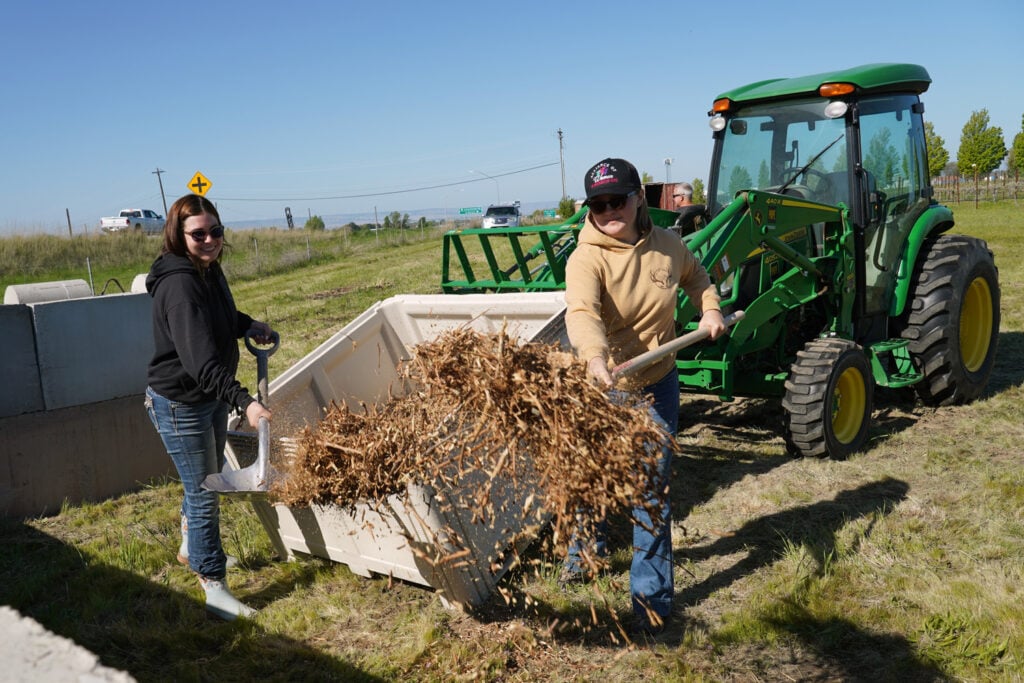
Biodynamic Composting at the Teaching Vineyard
Lead: Martin Fujishin, Director of Enology and Viticulture
Every year, WWCC’s teaching vineyard and winery generate large volumes of organic material — grape pomace from winemaking, vine prunings from winter work — that currently goes largely unused. This project turns that waste into a teaching tool and a soil amendment, creating the program’s first integrated, closed-loop composting system.
Students will:
- Build a composting area from concrete blocks
- Use a small wood chipper to process vineyard prunings
- Combine pomace, chipped prunings, straw, and manure with biodynamic herbal preparations to enhance microbial activity
- Manage and turn the pile through the season
- Apply finished compost to vineyard blocks and track the results with pre- and post-application soil tests
- Present findings through a student-designed poster and a presentation at the EV Center
Biodynamic and regenerative practices are increasingly valued in the wine industry, especially among premium and small-scale producers, so the project gives Enology and Viticulture students hands-on exposure to techniques that are growing in real-world job-market relevance. The compost bins and chipper become permanent program infrastructure, available for future student-led projects.
Status Update: Since project approval, we have completed the initial planning and procurement phase of the composting system and the compost structure has been built. Students are now identifying, crafting, and preparing biodynamic compost preparations using sustainably sources materials as the program transitions toward full biodynamic implementation. First-year students are conducting baseline soil sampling. These samples will provide pre-application data to evaluate long-term soil response once the compost is applied. Remaining activities include building out the infrastructure. Next fall, grape pomace becomes available during harvest season and will be incorporated. The college is already benefitting from enhanced student engagement in sustainability planning and applied vineyard systems thinking. This project is a long-term program asset that will support future cohorts and strengthen E&V’s program leadership in sustainable winegrowing education. Student ownership of the project continues to grow and reinforces hands-on learning and demonstrates WWCC’s commitment to regenerative agricultural practices.
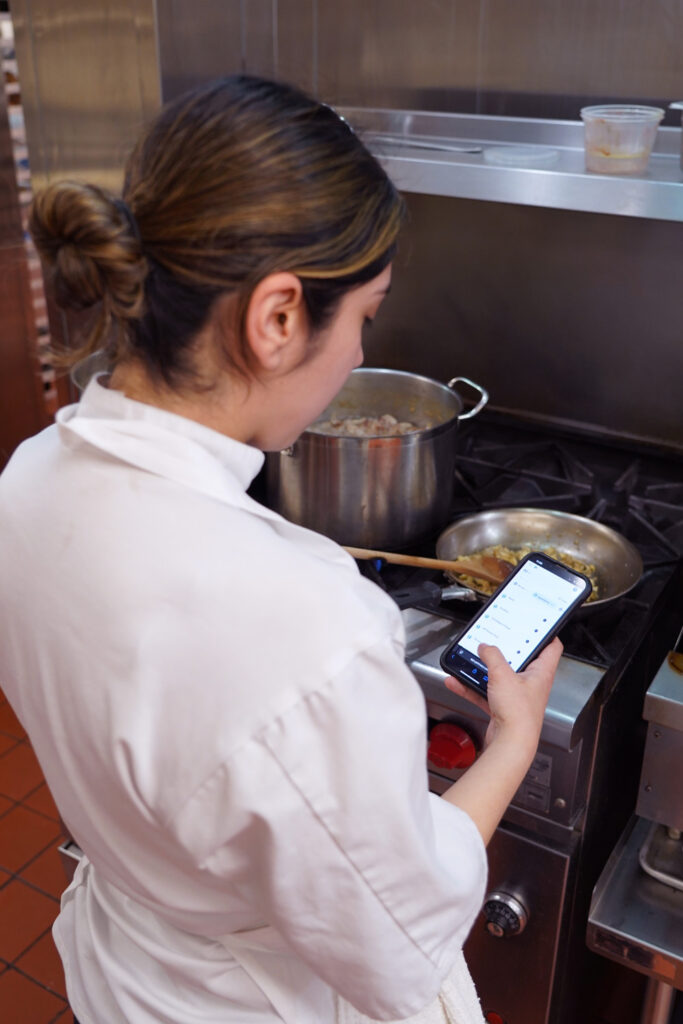
Meez Recipe Software for the Wine Country Culinary Institute
Lead: Dan Thiessen, Interim Director of Culinary Arts
The Culinary Arts Program currently runs on spreadsheets — costing, scaling, and organizing recipes by hand. The math works, but it eats instructional time and doesn’t reflect how modern professional kitchens actually operate. This project brings the program onto Meez, the industry-standard recipe database and costing platform used by hospitality businesses across the country.
With Meez, students and instructors get:
- A centralized, standardized recipe database
- Automatic scaling, sub-recipe handling, and yield adjustments
- Real invoice integration for accurate ingredient costing
- Menu engineering tools and automatic shopping lists generated from Capstone menus
- A personal Meez account each student can keep after graduation
The shift moves instructional time away from troubleshooting spreadsheet errors and toward technique, menu analysis, and creativity. Targets for the first year include a digital library of at least 100 standardized recipes, an estimated 10–15% reduction in food waste and over scaling in Capstone Kitchen, and up to 40 students per year benefiting directly. It also positions WWCC’s Culinary Arts Program as a modern, industry-connected training ground for future culinarians.
Status Update: Since the project approval, the software has been purchased and is currently being implemented with both 1st and 2nd year Culinary programs. We have over 100 recipes loaded into Meez currently, mostly from Capstone Kitchen and students working on them there. We are now building out the recipes for the first 4 quarters of the new curriculum. Once the recipes are all finalized, we’ll then organize them into quarters and classes, that way the students know exactly where to find the recipes needed for each day of class in that section. Meez not only helps students learn recipe costing, but it also allows us to understand the true cost of daily instruction, which can then be scaled up or down based on the number of students in each class. This will be giving us real time data that is critically important to budgeting and forecasts.

Student-Run Recycling Collection Program
Lead: Rob Lenahan, Executive Director of Facilities and Capital Projects
Recycling bins exist all over campus — but inconsistent collection and limited involvement have held back what’s possible. This project adds another waste stream to recycling collections at WWCC..
The program expands glass collections and recycling support on campus to include:
- Weekly pickups from designated recycling stations across campus
- Education and outreach through events, signage, and social media
- Glass recycling routed to BIG Recyclers in Walla Walla
- A partnership with the Enology and Viticulture program for wine-bottle recycling
- Battery collections and other hard-to-recycle material streams
The program also funds equipment improvements — including lights and doors on the custodial utility vehicle — to enable year-round, all-season collections.
Beyond waste diversion, this project lays the data foundation for WWCC’s potential first STARS report through the American Association for Sustainability in Higher Education (AASHE). STARS (Sustainability Tracking, Assessment & Rating System) is the higher-ed sector’s standard sustainability framework, and consistent waste-stream tracking is a building block for entry.
Status Update: Since project approval, all materials have been purchased. We’ve finalized the service structure and established logistics for material drop-off. The roll out phase is completed and the project will continue on an ongoing basis as long as glass recycling options remain viable withing the community. The project strengthens our sustainability operations, which directly aligns with the College’s guiding principles.

Rapid Remediation for Digital Accessibility
Lead: Courtney Carlson, Director for the Center for Teaching and Learning
Washington State’s accessibility mandate and the U.S. Department of Justice Accessibility Rule taking effect in April 2026 set a firm deadline for making digital course materials accessible to every student. For faculty juggling full teaching loads, the gap between knowing this matters and finding the time to fix it is real.
The CTL’s Innovation Fund project closes that gap with a two-part service-plus-skills model:
- Pop-Up Remediation Visits — short, hands-on clinics that travel to faculty in their unit meetings and finish concrete fixes during the visit.
- The CTL Lab Corner — a dedicated workspace for short audio cleanup, caption attachment, transcript work, and accessible-format exports.
Backed by an instructional designer, the project also produces a Core Accessibility Checklist and a Fast Five Fixes one-pager tailored to WWCC, plus a simple intake workflow with posted turnaround times. Priority goes to high-impact courses — First Year Experience and foundational English and Math — where accessible design has the greatest effect on student persistence and gateway success.
By the end of spring quarter, the project aims to remediate at least 200 artifacts across documents, slides, PDFs, and Canvas pages, caption hundreds of minutes of video, and bring at least 15 courses up to Core Accessibility Criteria. Just as importantly, the checklists and intake workflow are built to outlive the pilot — becoming permanent CTL services.
Status Update: Since the project launch, the Center for Teaching and Learning (CTL) has focused on foundational elements of the proposed “pop-up” accessibility model, including development of a Canvas Accessibility resource page and creation of digital accessibility handouts aligned with our goal of providing just-in-time, practical support for faculty. While some implementation components have required timeline adjustments, this period has been used productively to build core resources and align project infrastructure. Remaining work includes finalizing “pop-up” learning materials, launching unit-based engagements, and completing lab corner setup with planned equipment purchases (audio and video peripherals, and accessibility reference materials). The project is already increasing faculty awareness and practical application of accessibility strategies and will continue to expand into a scalable, service-based model that strengthens equitable access to course content and supports student success across WWCC.